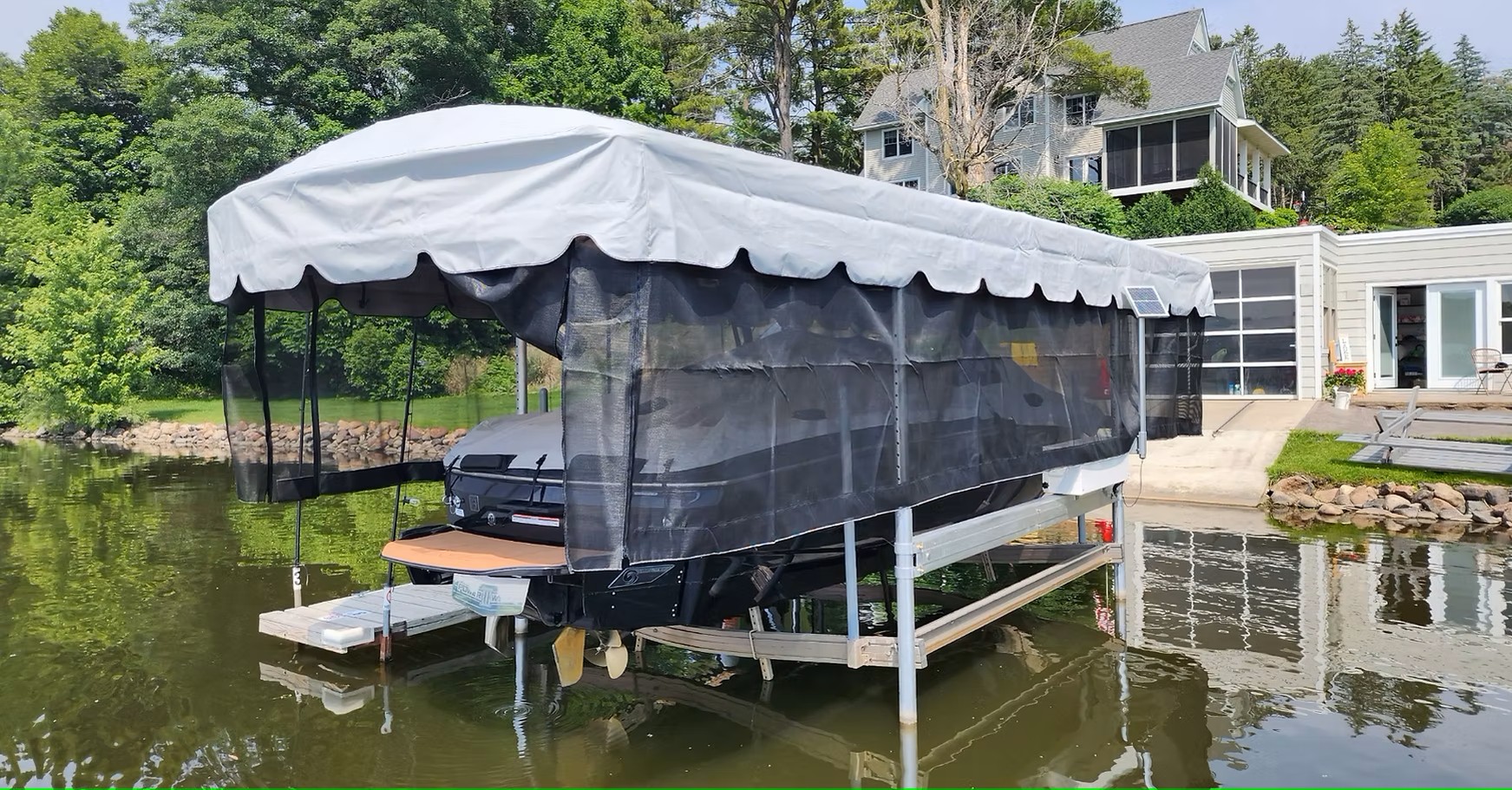
A reliable boat lift makes Minnesota lake life easier. It keeps your boat out of the water when you’re not using it, helps protect your watercraft, and makes getting on and off the lake more convenient.
But like any equipment exposed to the elements, boat lifts don’t last forever.
After years of use, an older lift may begin showing signs of wear. It may operate more slowly, require frequent adjustments, or no longer fit your boat as well as it once did. Sometimes the warning signs are obvious, while others develop gradually over several boating seasons.
Knowing when to replace a boat lift can help homeowners avoid unexpected equipment failures. It can also prevent unnecessary repairs and potential damage to their watercraft.
The good news is that not every problem requires a complete replacement. Some issues can be addressed through routine maintenance or professional repairs.
Here are seven signs that it may be time to consider a new boat lift for your Minnesota lake property.
One of the most important warning signs is damage to the lift’s frame or supporting components.
Boat lifts are designed to support substantial weight, but years of use, storms, improper handling, and winter ice exposure can affect their condition.
During a visual inspection, look for bent supports, cracked welds, distorted framing, or connections that no longer align properly.
A boat lift relies on its frame to distribute weight and maintain stability.
If structural components become damaged, the lift may no longer support the watercraft as intended.
A visibly bent frame doesn’t automatically mean the entire system needs replacing. However, significant structural damage should be evaluated before the lift is used again.
When multiple supporting components are compromised, boat lift replacement may be more practical than extensive repairs.
Avoid attempting improvised structural repairs that haven’t been approved by the manufacturer or evaluated by a qualified professional.
A boat lift should raise and lower your watercraft in a controlled, predictable manner.
If operation becomes increasingly difficult, that’s a sign something needs attention.
Common boat lift problems include jerky movement, uneven lifting, unusual noises, slow operation, or difficulty raising and lowering the boat.
These symptoms can have several causes.
Depending on the lift design, problems may involve cables, pulleys, hydraulic components, electrical controls, or other operating mechanisms.
A single worn component may be repairable.
However, recurring operational problems can suggest broader wear, especially when multiple parts require attention.
If the lift has become unreliable despite appropriate maintenance, compare the cost of additional repairs with the benefits of a replacement system.
Never continue operating a lift that moves unpredictably or appears unable to support the boat safely.
Occasional maintenance is a normal part of boat lift ownership.
Cables, hardware, bunks, guides, and other components may need attention over time.
However, there’s a difference between routine maintenance and repeatedly repairing the same aging equipment.
If you’re scheduling boat lift repair every season, it may be worth reviewing how much you’ve spent.
Consider whether those repairs have provided dependable performance or simply postponed the next problem.
The least expensive option today isn’t always the most economical choice over several years.
A relatively minor repair may make sense when the frame is sound and the lift has plenty of useful life remaining.
On the other hand, extensive repairs to an older system may represent a significant investment without providing the dependability of a newer lift.
Replacement becomes more appealing when repair costs continue increasing or compatible parts become difficult to find.
One of the most important reasons to replace a boat lift has nothing to do with its age.
Your watercraft may have changed.
Perhaps you upgraded from a smaller fishing boat to a larger recreational boat, purchased a pontoon, or added equipment that increased the boat’s overall weight.
A lift that worked perfectly for your previous watercraft may no longer be appropriate.
Lift capacity should account for the watercraft’s actual loaded weight, including the motor, fuel, batteries, installed equipment, and accessories.
Boat dimensions also matter.
Width, hull design, pontoon configuration, and bunk placement can all influence compatibility.
Never assume a lift is suitable simply because the new boat fits between the supports.
If the existing lift’s rated capacity or specifications cannot be verified, consult the manufacturer or a qualified lift professional before using it.
A properly sized new boat lift in Minnesota can provide a better match for both your watercraft and waterfront conditions.
Boat lifts contain components that experience repeated movement and loading throughout the boating season.
Over time, those components may deteriorate.
Cable-operated systems deserve particular attention.
Fraying, kinking, corrosion, or unusual cable wear may indicate that service is needed.
Hydraulic lifts may develop problems involving hoses, pumps, connections, or controls.
A damaged cable doesn’t automatically mean the entire lift needs replacing.
Many components can be serviced or replaced when the system remains structurally sound and compatible parts are available.
However, widespread mechanical deterioration may indicate that the lift is approaching the point where replacement deserves consideration.
If several major components require attention at the same time, evaluate the total repair cost rather than treating every problem separately.
For safety, avoid operating equipment with visibly damaged cables or critical lifting components.
Sometimes a boat lift still functions, but using it has become unnecessarily frustrating.
Perhaps raising the boat requires more effort than it used to. Maybe the controls are inconvenient, the lift doesn’t align well with the dock, or loading the boat has become difficult.
These issues may reflect worn components, improper positioning, or a system that no longer fits your needs.
Newer boat lifts may offer features that make waterfront activities more convenient.
Depending on the model, options can include hydraulic operation, remote controls, improved guides, and accessories designed for specific watercraft.
Sidco Docks offers Tidal hydraulic boat and pontoon lifts with capacities ranging from 4,000 to 8,000 pounds.
These systems feature marine-grade aluminum construction, stainless steel cables, and hydraulic components positioned above the water.
For homeowners with an old boat lift, upgrading may provide a more convenient system that better matches their current boat and dock configuration.
However, convenience alone doesn’t mean replacement is necessary. If the existing lift is safe and dependable, adjustments or accessory upgrades may be sufficient.
Minnesota lakes can be demanding environments for waterfront equipment.
Strong summer storms, changing water levels, waves, and winter ice movement can affect boat lifts.
The Minnesota Department of Natural Resources explains that ice heaving can create powerful forces capable of damaging docks, boat lifts, and shoreline structures.
A lift that has experienced significant weather-related damage should be inspected before returning to service.
Some problems are immediately visible, such as bent supports or displaced frames.
Others may involve misaligned components, damaged connections, or operating mechanisms affected by structural movement.
If a lift was pushed, twisted, or displaced during a storm or winter event, don’t assume it’s safe simply because it still operates.
A professional inspection can help determine whether repairs are practical or whether replacement is the safer long-term solution.
There’s no universal expiration date for a boat lift.
Its useful life depends on construction materials, maintenance, operating conditions, seasonal storage, and how closely it has been matched to the watercraft.
A well-maintained lift may remain dependable for many years, while equipment exposed to severe damage or improper use may require replacement sooner.
Instead of relying on age alone, consider the lift’s actual condition.
An older system with a sound frame, available replacement parts, and reliable operation may still provide good service.
A newer lift with significant structural damage or insufficient capacity may need attention much sooner.
The goal is to evaluate performance and safety rather than make a decision based solely on the year of purchase.
When evaluating an aging lift, consider the following questions:
If the problems are limited to replaceable components, repairing the lift may be reasonable.
If structural damage, repeated failures, or capacity limitations are involved, replacement may be the better choice.
If replacement makes sense, selecting the right system is important.
Start with your watercraft’s manufacturer specifications, including loaded weight, dimensions, and hull configuration.
Then consider the lake property itself.
Water depth, lake-bottom conditions, shoreline slope, and dock layout can influence installation and operation.
A boat lift should fit both the watercraft and the location where it will be used.
Many Minnesota lake homeowners remove their lifts before winter to reduce exposure to damaging ice movement.
When selecting a replacement, consider how the equipment will be installed, removed, and stored.
Sidco Docks provides new lift sales, professional installation, seasonal removal, repairs, and barge services throughout the Brainerd Lakes Area.
Evaluating the lift and its seasonal service requirements together can help homeowners choose a system suited to their property.
If you’re replacing an existing lift, you may decide to sell it or purchase a used system.
Minnesota’s aquatic invasive species requirements are important whenever equipment moves between waterbodies.
The Minnesota DNR requires used docks, lifts, and rafts to remain out of the water for at least 21 days before installation in a different lake or river.
Equipment must also be cleaned of aquatic plants and prohibited invasive species and drained appropriately.
These requirements help reduce the risk of transporting invasive organisms between Minnesota lakes.
Planning ahead is especially important when buying or selling equipment during the boating season.
Deciding when to replace a boat lift isn’t always about waiting for something to break.
An aging lift may still operate, but structural wear, repeated repairs, capacity limitations, or inconvenient operation can signal that it’s time to evaluate your options.
The most important factors are safety, reliability, compatibility, and long-term value.
Sometimes a straightforward repair can extend the life of an existing system. Other times, investing in a properly sized replacement may provide greater dependability and convenience.
For Minnesota lake homeowners, understanding these seven warning signs makes it easier to maintain waterfront equipment and prepare for another enjoyable boating season.
Sidco Docks is based in Pillager, Minnesota, and serves lakefront property owners throughout the Brainerd Lakes Area and surrounding communities.
The company offers Tidal dock and boat lift sales, spring installation, fall removal, repairs, storm recovery, and barge services.
For homeowners researching boat lift problems, repair options, replacement systems, or equipment suited to a particular watercraft, Sidco Docks can provide information based on the existing lift and waterfront property.
Sidco Docks
Location: Pillager, Minnesota
Phone: (218) 838-7179
Email: yourdockguy@hotmail.com