Minnesota has an unusual relationship with water. We don’t just visit lakes—we shape summer rhythms around them, manage property around them, and measure seasons by what the shoreline looks like. That relationship makes docks and boat lifts less like optional gear and more like essential infrastructure. A well-built dock system turns a lake edge into a functional living space. A reliable lift protects your boat from waves, algae, and wear. And thoughtful seasonal service keeps both working smoothly in a state where water levels, ice, and storms change the rules several times per year.
Sidco Docks, based in Pillager and serving the Brainerd Lakes area and Central Minnesota, is a useful local reference for what full-service dock and lift care looks like. Their website presents a clear scope: premium dock and lift sales (including Tidal Docks and Lifts), professional installation, seasonal removal, maintenance and repairs, storm recovery, and barge support for shoreline tasks. This guide brings those pieces into one reference-style explanation for lakefront owners who want to understand the system before they invest time or money.
The aim here isn’t to push a buying decision. It’s to make Minnesota dock and lift ownership easier to navigate—especially if you’re new to lake property, upgrading an old setup, or trying to reduce the annual “dock scramble” before and after winter.
In many states, docks are semi-permanent. In Minnesota, they live in a seasonal cycle:
Sidco Docks emphasizes seasonal installation and removal as a core service precisely because Minnesota’s freeze–thaw reality makes year-round in-water docking risky for most properties.
Thinking seasonally changes how you choose equipment. A dock that’s perfect in July but a nightmare in October isn’t actually perfect. Minnesota lake living rewards systems designed for fast transitions, durability under ice stress, and easy adjustments when water levels fluctuate.
Most Minnesota lakefront owners choose between stationary and floating docks, or a hybrid of both. Sidco Docks sells and installs both styles, which makes their model a good way to frame the choice.
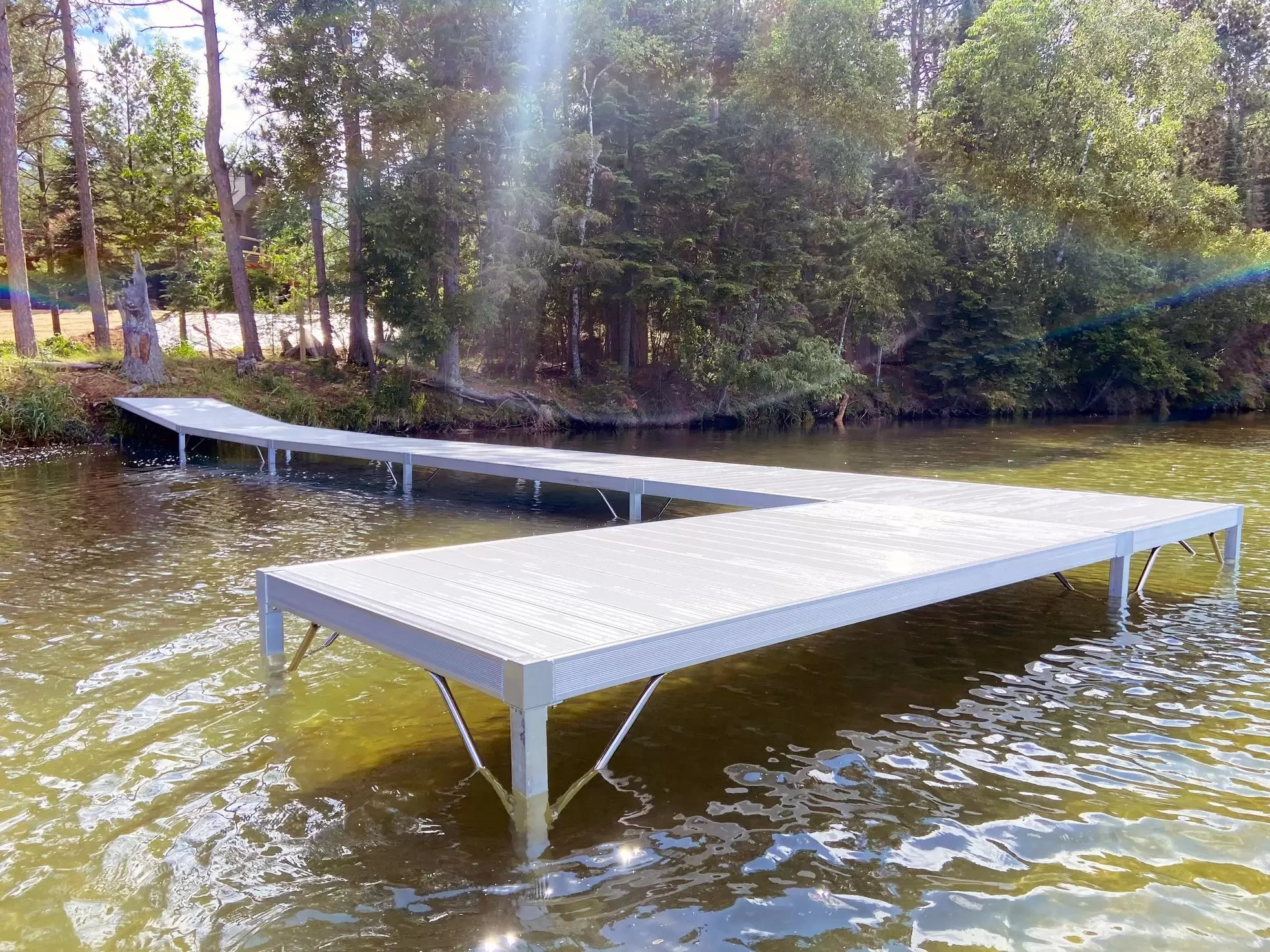
These docks stand on legs fixed into the lakebed. In Minnesota, they’re common on shallower shorelines with relatively stable bottoms.
Strengths:
What to consider:
Stationary docks are like the reliable pickup truck of shoreline infrastructure: steady, predictable, and happiest where the terrain cooperates.
Floating docks sit on pontoons or floats and rise/fall with water movement.
Strengths:
What to consider:
Floating docks are more like a well-tuned boat: flexible, adaptive, and great when depth and fluctuation are part of your shoreline story.
A boat lift looks simple, but its function is multi-layered. Sidco Docks highlights lifts as a key part of a complete waterfront system.
A lift protects your boat by:
Minnesota water can be crystal clear or tannin-dark, but either way, leaving a boat in water for months accelerates wear. In lift terms, every summer you don’t use a lift is a summer your boat ages faster than it needs to.
Sidco’s product lineup includes heavy-duty lift options designed for Minnesota conditions, with an emphasis on strength, stability, and long-term performance.
Dock and lift installation often looks deceptively straightforward. But in practice, a durable Minnesota setup depends on matching equipment to the actual shoreline environment.
Sidco Docks describes professional installation as a “hassle-free” way to ensure safe, stable placement tailored to each lakefront property.
A dock system that’s installed with these variables in mind holds up longer, feels better to use, and needs fewer mid-season fixes.
If installation is spring’s big moment, removal is fall’s insurance policy. Sidco Docks specializes in seasonal dock and lift removal, reflecting how critical this step is in Minnesota.
Ice doesn’t just sit still. It expands, heaves, and pushes laterally. That movement can bend dock frames, shear bolts, and twist lift cradles. Even “mild” winters can be hard on in-water hardware.
Professional removal reduces risk because crews have the tools and pace to extract systems quickly, safely, and without shoreline damage.
Minnesota docks and lifts fail in predictable ways. Most problems don’t start as disasters; they start as small weaknesses.
Sidco Docks offers maintenance and repair across dock and lift brands, which speaks to a common lakefront need: keeping existing systems functional without full replacement.
A quick mid-season check can prevent:
Maintenance is quiet work, but it buys you years.
Storms arrive with different personalities—wind events, hail systems, sudden downpours that raise water fast, or long-duration gales that pile waves on one shoreline all night.
Sidco Docks lists storm recovery among its services, and that’s not accidental. In lake country, storms can:
A storm recovery team typically helps by:
In Minnesota, storm recovery is part of the shoreline maintenance ecosystem—like spring cleanup, but urgent and water-based.
One standout element on Sidco’s services page is barge support. Their barge is used not only for docks and lifts, but also for transport and shoreline tasks.
For properties with hard-to-reach shorelines, islands, or steep approaches, a barge can turn a multi-day manual effort into a measured, safe operation.
Sidco’s blog posts on dock and lift selection point to a simple reality: Minnesota lakefronts vary enough that choosing a system is more about fit than brand loyalty.
Here’s a grounded checklist for lakefront owners:
Sidco Docks emphasizes complete waterfront solutions, which usually means helping owners think through these choices as a coherent layout.
Minnesota lake systems are not uniform. Water clarity, weed growth, bottom composition, and wave exposure differ from lake to lake, and sometimes from bay to bay.
Sidco Docks highlights local expertise in the Brainerd Lakes area and Central Minnesota as part of its service model.
Local knowledge helps in concrete ways:
It’s not about tradition for its own sake. It’s about accuracy grounded in place.
Owning a dock system in Minnesota is a little like owning a seasonal vehicle. You don’t just buy it—you manage its rhythm.
A sustainable mindset looks like this:
This rhythm keeps shoreline living easy instead of hectic.
Minnesota lakefront life is equal parts relaxation and responsibility. Docks and boat lifts sit right in the middle of that equation. They’re what let you step into the water safely, protect the boat you rely on for fun and travel, and turn a shoreline into a usable, welcoming place.
Sidco Docks offers a full-service model—premium dock and lift sales, professional installation, seasonal removal, maintenance, storm recovery, and barge support—reflecting what lakefront owners typically need to make dock ownership feel simple rather than stressful.
If you’re planning a new setup or improving an older one, the most practical approach is to match equipment to your shoreline, take the seasonal cycle seriously, and treat maintenance as a quiet ally. In Minnesota, those habits don’t just protect your dock—they protect your summer. For additional resources click here.